Chatbot vs AI Business Manager: What’s the Difference and Why It Matters for Small Businesses
For many small businesses, automation starts with a chatbot.
A chatbot on a website or messaging app promises instant replies, fewer missed messages, and basic marketing automation. For simple use cases, this works. A chatbot can answer FAQs, share links, or collect contact details.
But as soon as conversations turn into real sales, follow-ups, and ongoing client relationships, the limits of chatbots become clear.
This is where the comparison between a chatbot and an AI Business Manager becomes important, especially for small businesses that need automation to actually move work forward.
Why Chatbots Stop Scaling With the Business
Traditional chatbots struggle when communication becomes more complex.
Common limitations include:
• poor understanding of long-term context
• no memory of previous interactions beyond a session
• no ownership over follow-ups
• no connection to sales pipelines or operations
A chatbot can answer a question perfectly and still fail the business if nothing happens next.
This is one of the main reasons small businesses outgrow chatbots faster than they expect.
Chatbot vs AI Business Manager: A Practical Comparison
For small businesses, the difference is operational.
A chatbot:
• automates replies
• runs inside one channel
• supports basic marketing automation
• stops at the conversation
An AI Business Manager:
• manages workflows
• understands conversation context
• coordinates actions across the business
• reduces manual decision-making
This distinction directly affects revenue, time, and customer experience.
Why This Matters for Small Businesses in 2026
Small businesses rarely have dedicated sales, support, and operations teams. One person often handles everything.
In this environment:
• missed follow-ups cost money
• delayed replies reduce trust
• manual coordination creates burnout
A chatbot helps respond faster. An AI Business Manager helps run the business more reliably.
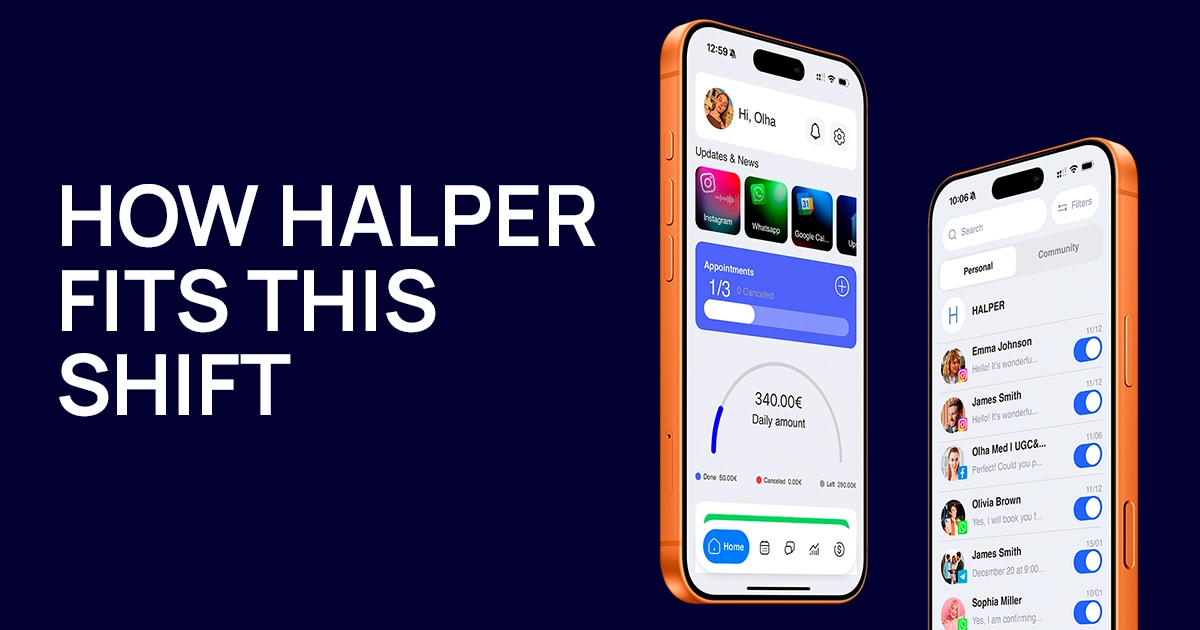
This is where tools like Halper begin to matter.
How This Connects to AI Insights and Sales Communication
This article is part of a broader shift toward AI insights for improving sales communication.
Chatbots focus on talking. AI Business Managers focus on understanding, timing, and coordination.
Halper applies AI insights not just to conversations, but to the entire flow of sales and operations.
Final Thoughts
The question is no longer chatbot vs AI chatbot. It is chatbot vs AI Business Manager.
Chatbots were created to automate messages. They respond faster, reduce surface-level friction, and handle simple, repetitive requests. For many small businesses, that was an important first step toward automation.
But speed alone is no longer enough.
As businesses grow, communication stops being a series of isolated messages and becomes part of a larger system. Every conversation affects follow-ups, scheduling, payments, retention, and revenue. When automation only talks but does not manage what happens next, it quietly creates gaps that business owners have to fill manually.
AI Business Managers represent a shift away from message-based automation toward responsibility-based automation. They do not just reply. They remember, connect, follow through, and coordinate actions across the business. That difference is subtle at first, but it compounds over time.
For small businesses in 2026, this distinction determines whether automation truly reduces workload or simply rearranges it. Tools like Halper matter not because they replace chatbots, but because they move automation beyond conversation and into management, where real leverage is created.
Follow Halper